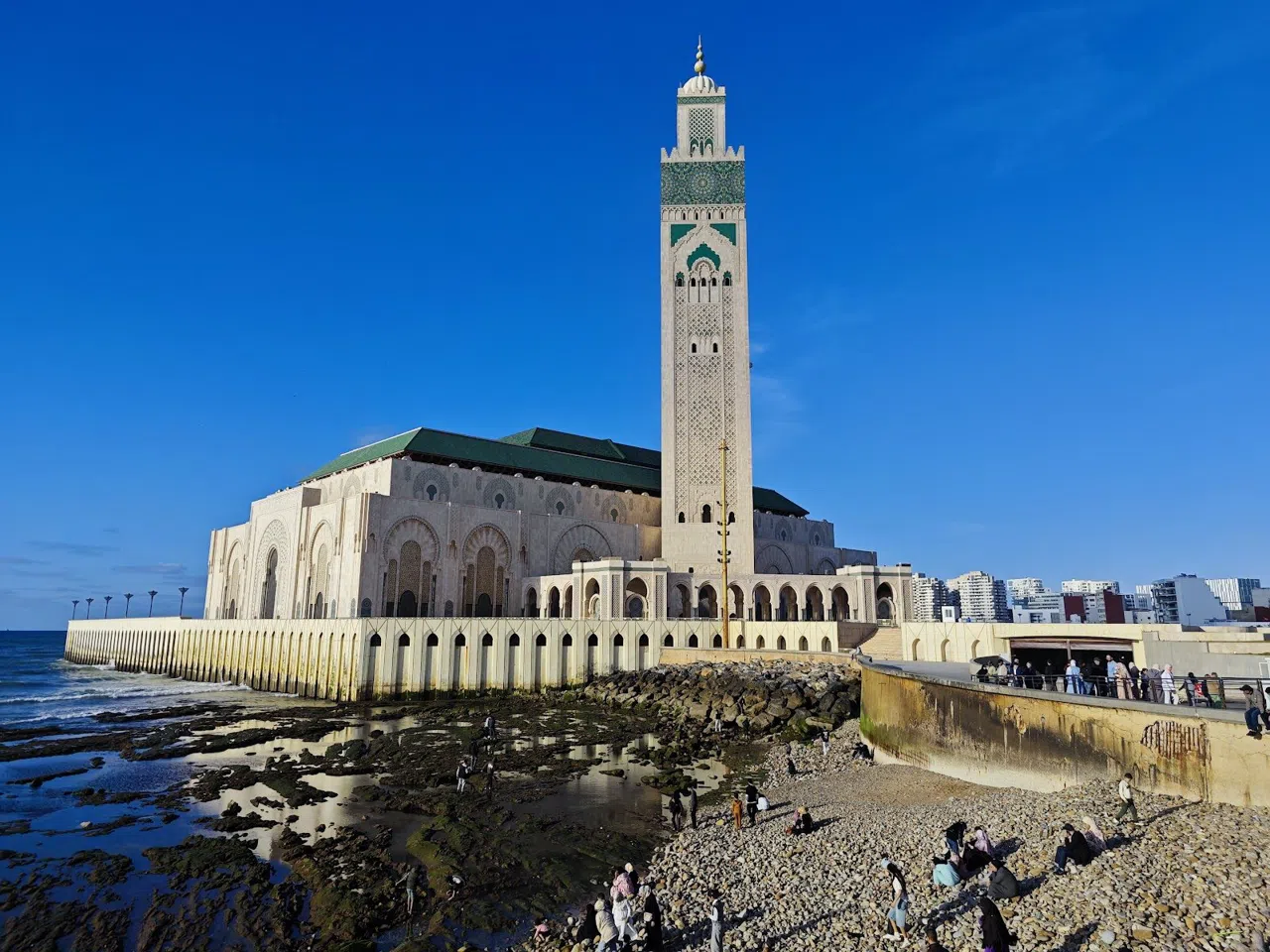

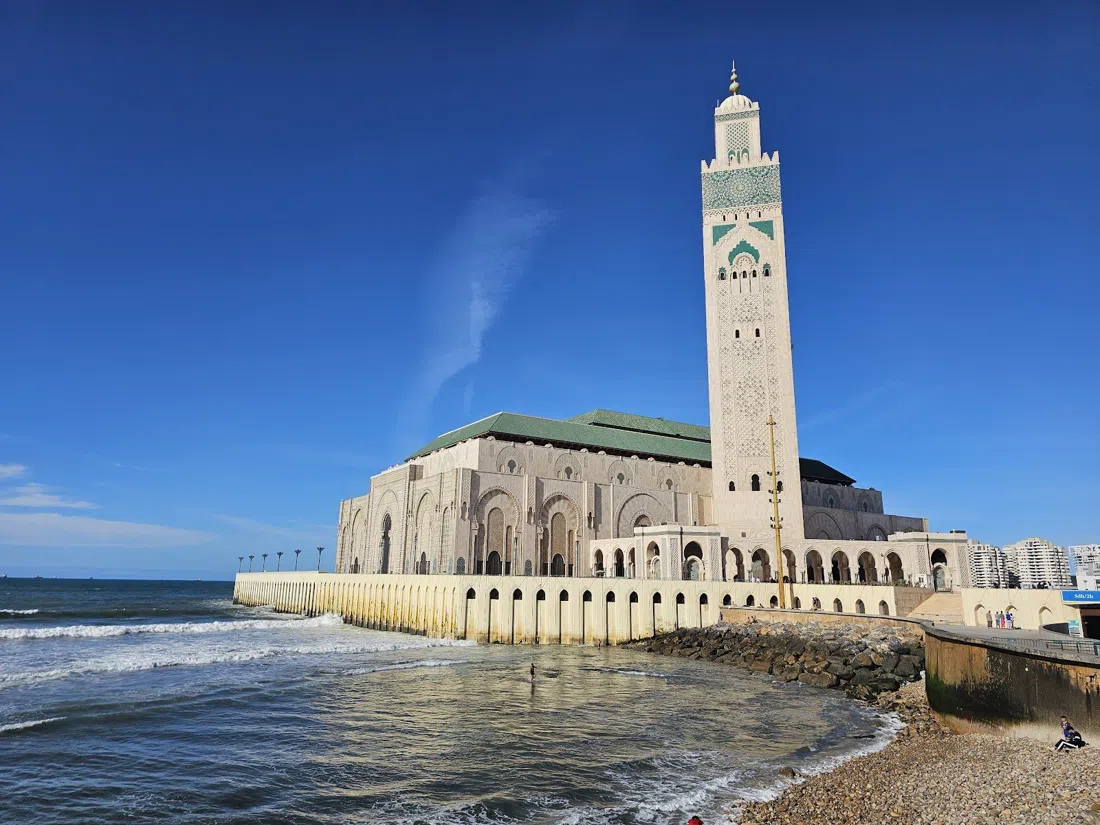
On a rising tide the swell breaks against the sea wall directly below the prayer hall, and the spray comes up high enough to darken the marble at the foot of the minaret. For a few seconds the largest mosque in Morocco looks as though it is standing in the Atlantic rather than beside it, which is more or less what was asked for. King Hassan II wanted a mosque where the faithful could contemplate the sky and the ocean, and the French architect Michel Pinseau obliged by pushing roughly a third of the platform out over the water.
What you are actually looking at
Hassan II Mosque (Mosquée Hassan II) is built on reclaimed shoreline at the northern edge of the city centre, ten to fifteen minutes on foot from the old medina and barely any distance from the cruise berth. Work began in 1986 and the mosque was inaugurated in 1993, paid for in large part by public subscription, a detail worth holding onto because it explains the scale better than any architectural argument. The minaret rises 210 metres, among the tallest in the world. The prayer hall takes 25,000 worshippers and the courtyard outside another 80,000. Part of the floor is glass, laid over the sea, and part of the roof retracts.
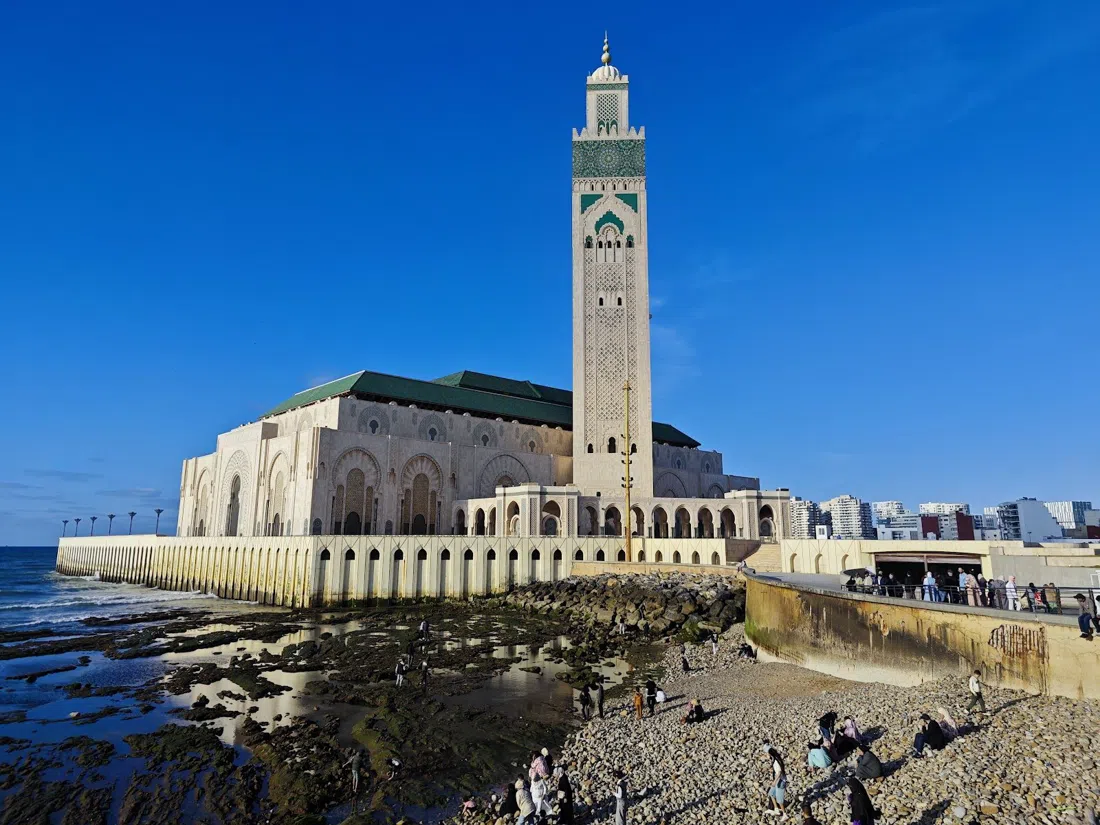
The numbers are not what stays with you. The handwork is. The building was made from Moroccan materials (cedar from the Middle Atlas, granite and marble quarried in the south) and finished by thousands of Moroccan master craftsmen using techniques that predate it by centuries: zellige set piece by piece, cedar carved in low relief across acres of ceiling, stucco cut while still wet. It is a late twentieth-century building executed as though it were a fourteenth-century one. That is the reason an hour here does not feel like a box being ticked, and the reason it anchors almost every itinerary in our Casablanca guide.
Inside on the guided hour
Non-Muslims may enter only on a fixed-time guided tour, and this is the single fact that governs your whole day. Tours run Saturday to Thursday at 9h, 10h, 11h, 12h and 15h, with a 16h slot added from 15 March to 15 September. Fridays are cut back for prayer, and Ramadan runs a reduced morning schedule, so check before you build a plan around it. The visit itself takes about an hour; allow ninety minutes door to door once you have taken your shoes off, gathered with your group and come back out.
The route runs through the prayer hall first, where the guide talks through the roof, the chandeliers and the tilework, and then down into the ablution hall below, which is the part visitors tend not to expect: a cool, vaulted level of lotus-shaped fountains directly under the sea-facing floor. The guides work in several languages and answer questions properly.
No photography, video or audio recording is permitted inside, and that catches most visitors out. Make peace with it early. The picture you will actually keep is taken from outside anyway, and the hour inside is better for having nobody framing a shot.
Tickets at the door and the case for booking ahead
The door price is 140 MAD for a foreign adult, 70 MAD for residents and foreign students, 30 MAD for children from six and Moroccan students, and free for under-sixes. A private VIP visit for up to ten people is bookable at 2,200 MAD. Coach and cruise groups do not get their own tours; they join the same scheduled slots as everyone else, and parties of 100 or more pay half price.
The constraint is never the ticket, it is the slot. If you are staying in the city with a flexible morning, walking up and buying at the door is entirely reasonable: pick the 9h or 10h tour and you will be fine. If you are arriving by ship with a fixed sailing time, or if you have one afternoon in Casablanca and no appetite for risk, a guided package that bundles the entry ticket with transport removes the one thing you cannot control. Those options run seven days a week, start from around 44 USD per person, and carry 7,528 traveller reviews between them, with the most-booked one rated 4.8 out of 5 from 3,061 reviews. That is the honest trade: you pay for the transfer and the certainty, not for better access, because the tour inside is the same tour.
What they will turn you away for
Shoulders, torso and knees stay covered, and this applies to men as much as women: shorts and sleeveless tops are refused at the door rather than tutted at. Shoes come off before the prayer hall; socks are more comfortable than bare feet on cold marble. A scarf is not required for women but is welcome. Voices stay low. Nothing about the enforcement is aggressive, but it is consistent, and there is no changing room to rescue you if you turn up in beachwear from the Corniche.
Below the mosque, hot water and hand tools
Two venues on the same campus are open independently of the tour, and both are badly under-used.
Les Hammams de la Mosquée Hassan II occupies the restored Moorish baths directly beneath the mosque and takes walk-ins daily from 08:00 to 23:00, with last entry at 22:00. Men's and women's sections are strictly separate and have their own reception numbers, which matters if you are booking for a couple or a group: you are making two calls, not one. Entry is 50 MAD for ninety minutes, 40 MAD for children aged three to ten; scrub rituals run from 90 to 500 MAD, the heated seawater basin is 150 MAD, and combined mosque-visit-plus-ritual packages sit between 400 and 650 MAD. The operator has posted occasional one-off maintenance closures, including one in July 2026, so ring the relevant desk before you build a short port day around it.
Académie des Arts Traditionnels de Casablanca, on the same Hassan II Mosque Foundation campus, answers the question every single tour group asks on the way out: who actually made all this. The ground-floor museum and the exhibition programme are open to visitors for nothing or close to it, with original zellige, carved cedar and stucco panels on display and apprentices working the same crafts a few metres away. Groups are best arranged through the Foundation. Twenty minutes here changes how you remember the mosque.

The esplanade and the long walk west
Esplanade and Promenade Maritime de la Mosquée Hassan II is free, ungated and open at any hour, and it is where the photograph lives. Come about forty-five minutes before sunset and walk the seaward side, where the low light crosses the whole west face and the waves do the rest. It is also the default muster point for coach and cruise parties, which makes it the obvious place to wait out a slot you booked an hour too early.
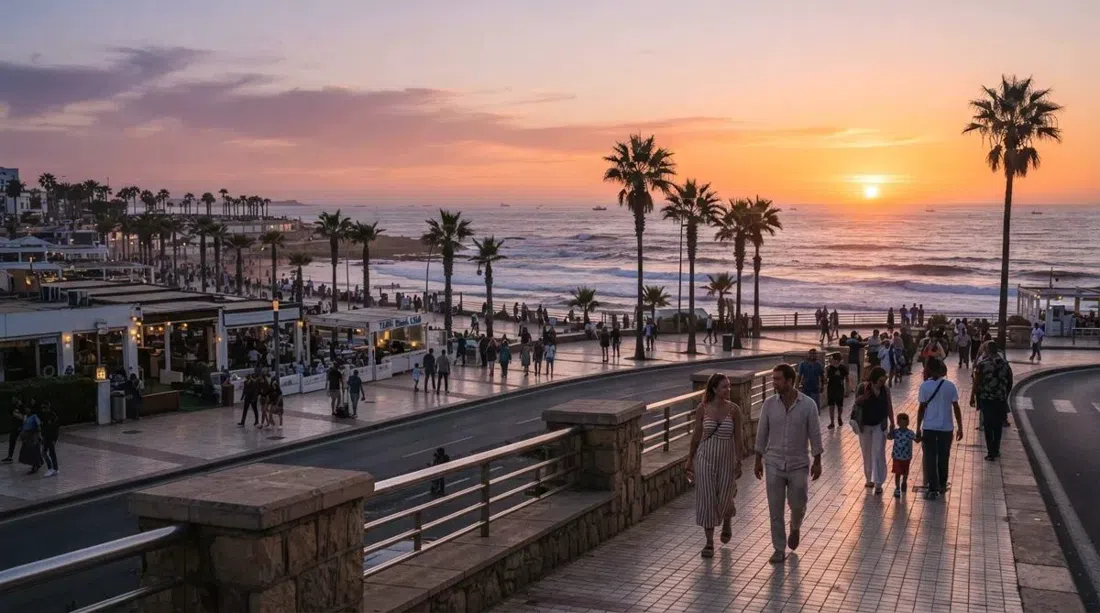
From there, Corniche Aïn Diab now runs unbroken from the mosque esplanade to the El Hank lighthouse, and the regeneration has turned the walk itself into the attraction rather than a way of reaching the bars at the far end. It is free to walk; the beach clubs, terraces and nightclubs along it set their own door policies and fill up after dark, with spend from about 100 MAD upward. This is where the city goes out.
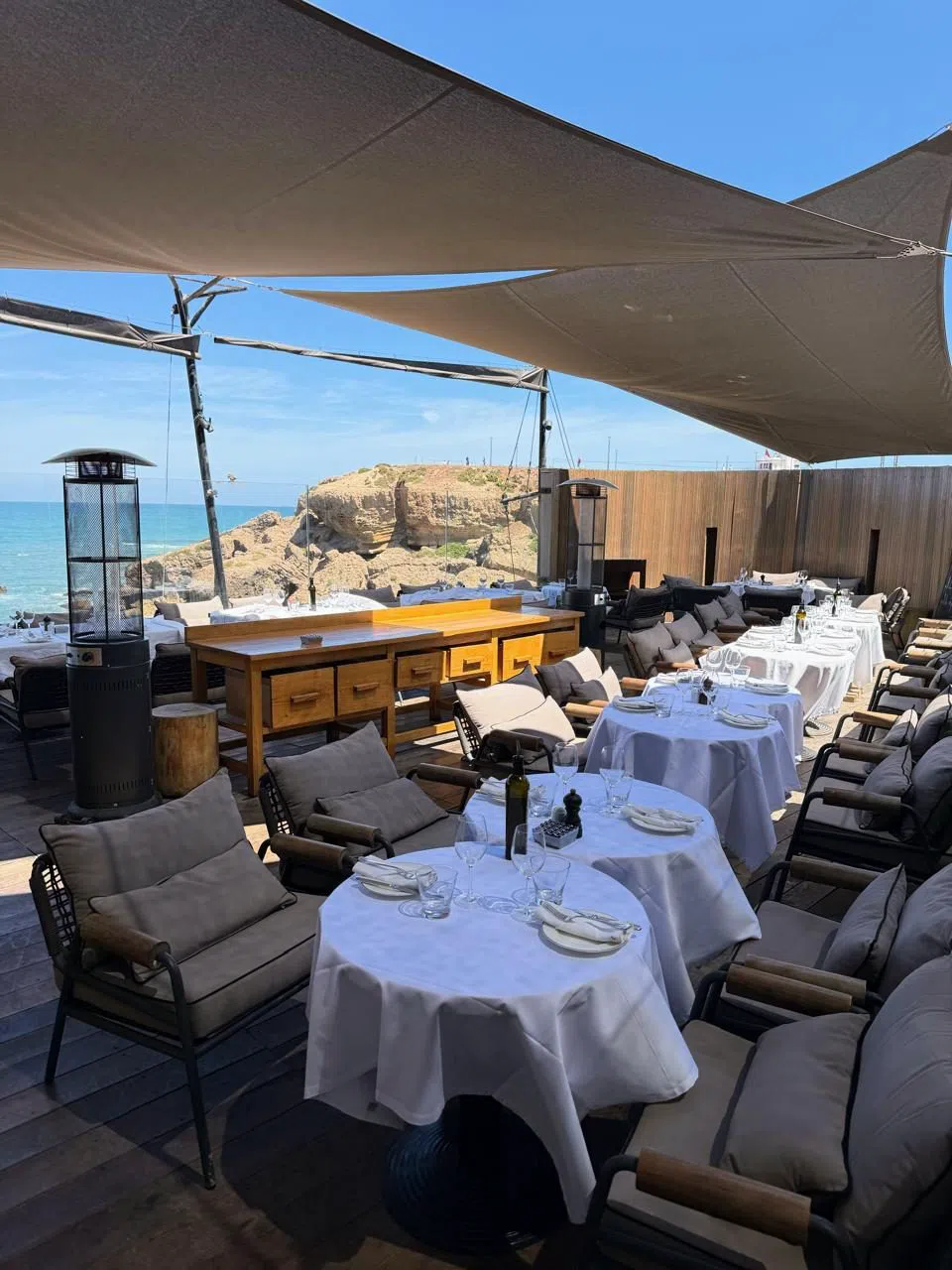
Le Cabestan, on the Corniche below the lighthouse, has been open since 1926 and was recently gutted and rebuilt into three rooms over the water. At roughly 400 to 700 MAD a head with wine it is the one splurge out here that earns the money, but only if you reserve the deck well ahead and arrive before sunset, because that table is the entire reason people come.
An hour to fill before your slot
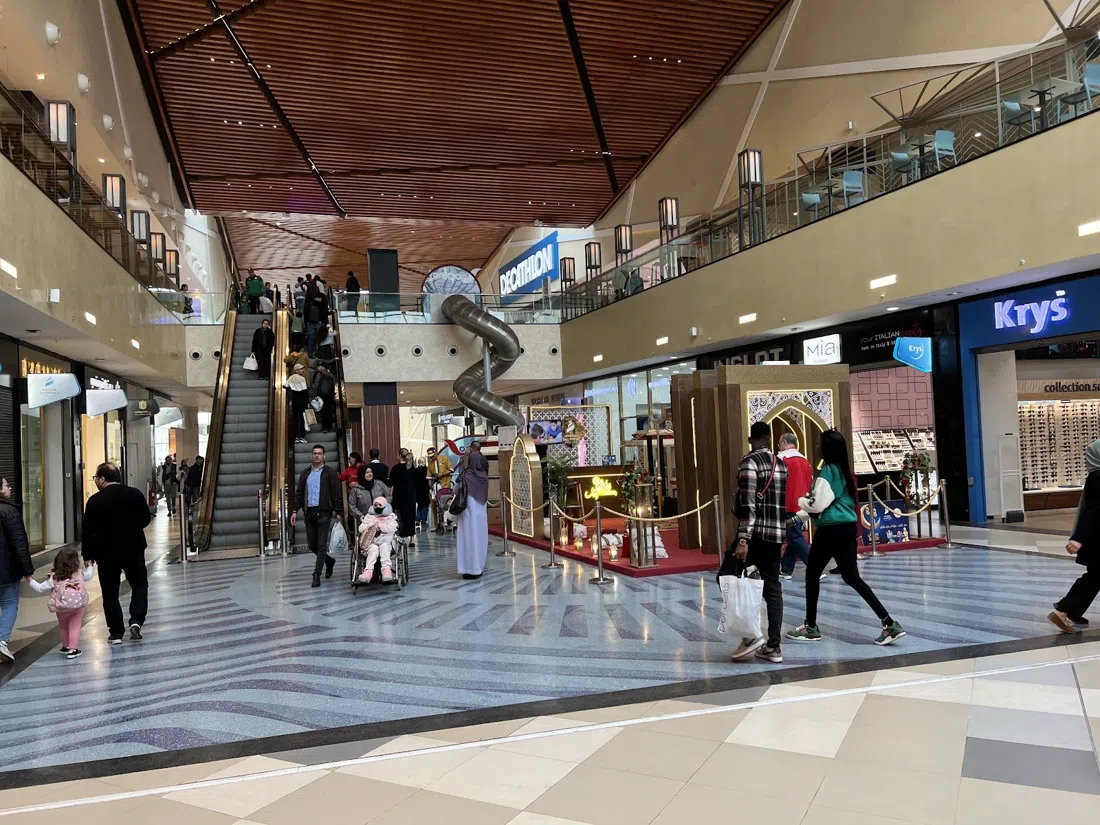
Casablanca Marina and Marina Shopping, immediately east of the esplanade, is the unglamorous but genuinely useful gap-filler: a free public promenade and mall with air-conditioning, clean toilets, working cash machines and a ten-minute walk to the mosque gate. Café and restaurant spend runs 60 to 250 MAD a head. Weekend and peak-hour terraces are crowded; a weekday morning gets you the view to yourself.
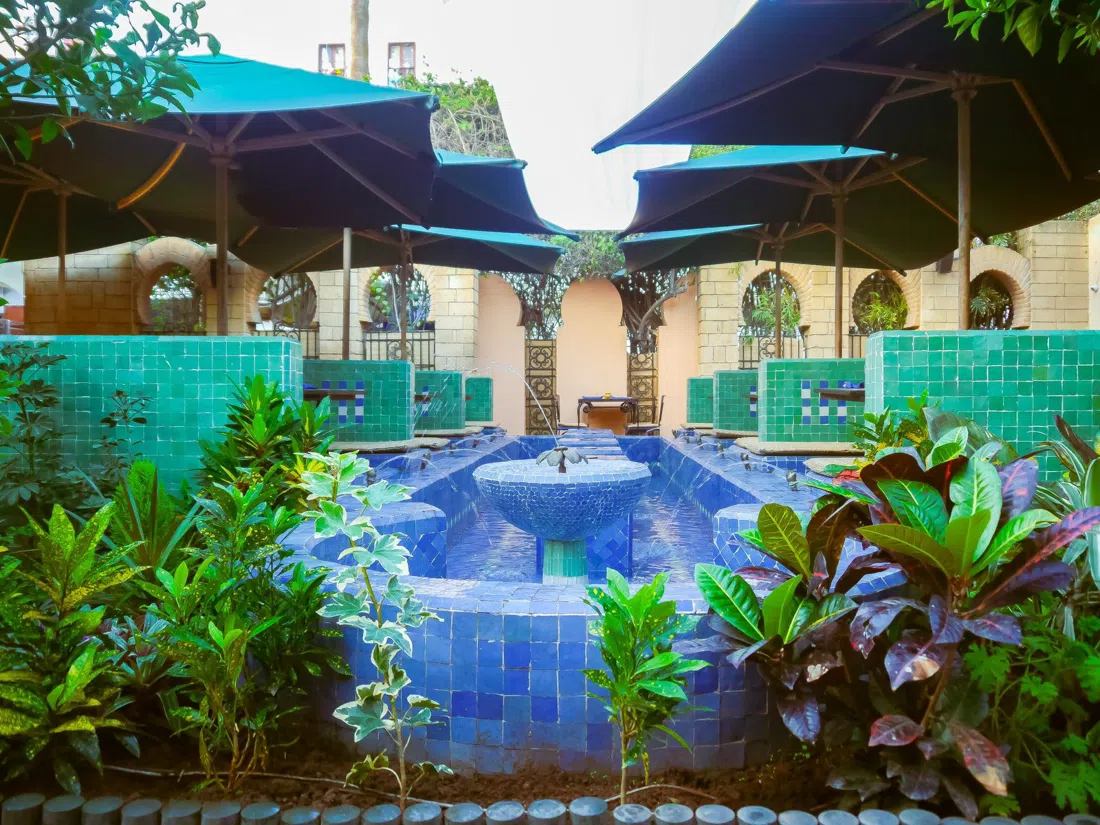
La Sqala, set inside a bastion of the old sea fort on the medina side, is a better use of a spare hour than any food court. Moroccan breakfast in a walled garden inside a fortification costs around 100 to 150 MAD, mains run roughly 120 to 250 MAD, and the courtyard absorbs groups well, though reserve for anything over six. It opens daily for all three meals.
Old Medina of Casablanca (Ancienne Médina) is a ten-minute walk from the mosque and the only genuinely old fabric in a city that was largely built in the twentieth century. It is workaday rather than picturesque, which is precisely the argument for going: this is a quarter where people live and trade rather than perform. The lanes are tight and unkind to large groups, so split up or take a local guide. Keep bags zipped and expect steady, non-threatening offers of guiding.
When the slot leaves you stranded
If the only available tour is three hours away, the city centre has better answers than a mall.
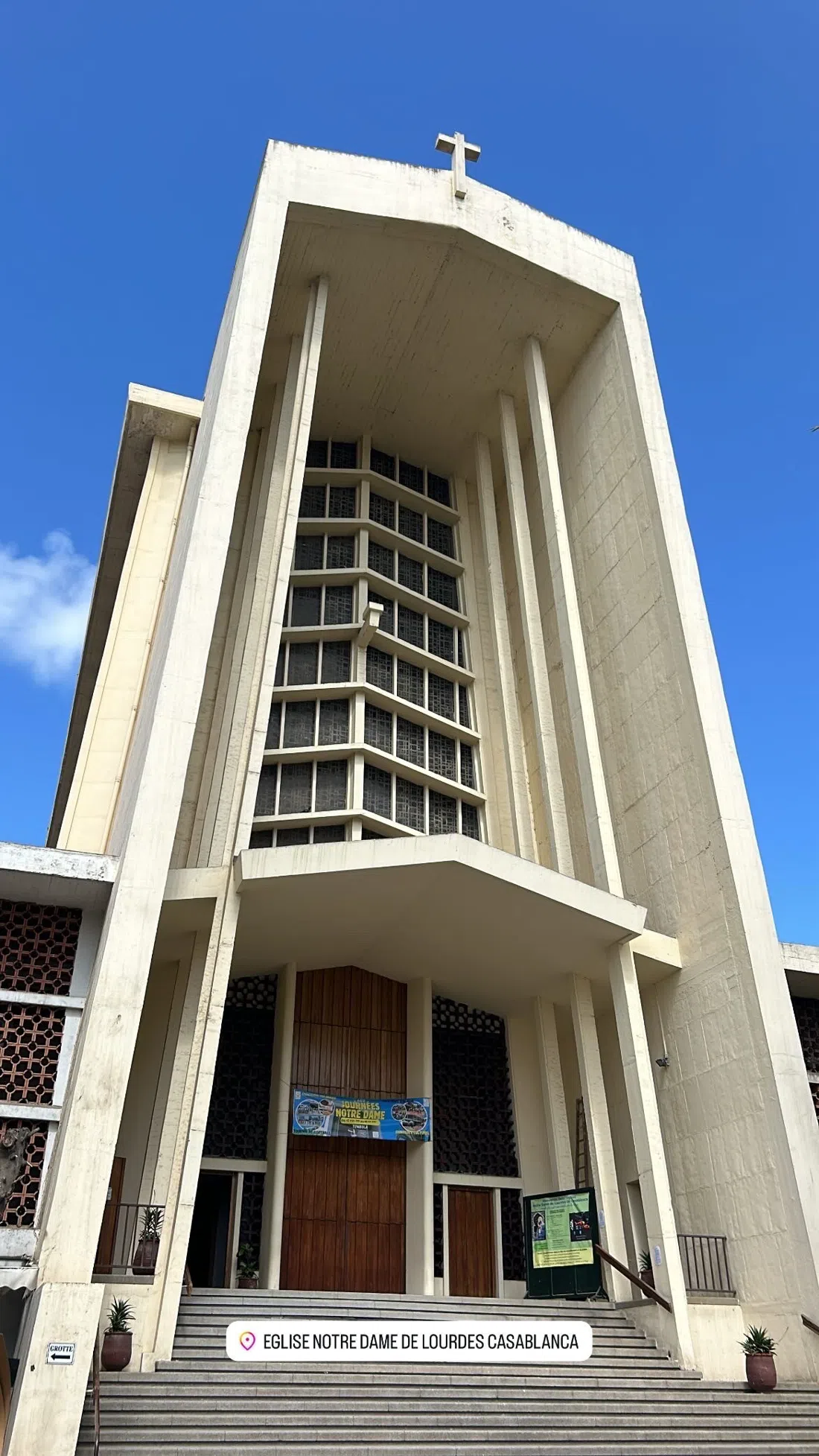
Église Notre-Dame de Lourdes, in the city centre, is a brutal concrete box from the outside and an astonishing wall of coloured light within. Go late morning or early afternoon, when the sun is coming through the glass, and treat it as the companion piece to the mosque. Between them you have the two best interiors in Casablanca, and both are free to look at.
Villa des Arts de Casablanca, also central, is free, air-conditioned, rarely crowded and hung with a changing programme of Moroccan contemporary work. It is the best no-cost hour downtown and it welcomes groups.
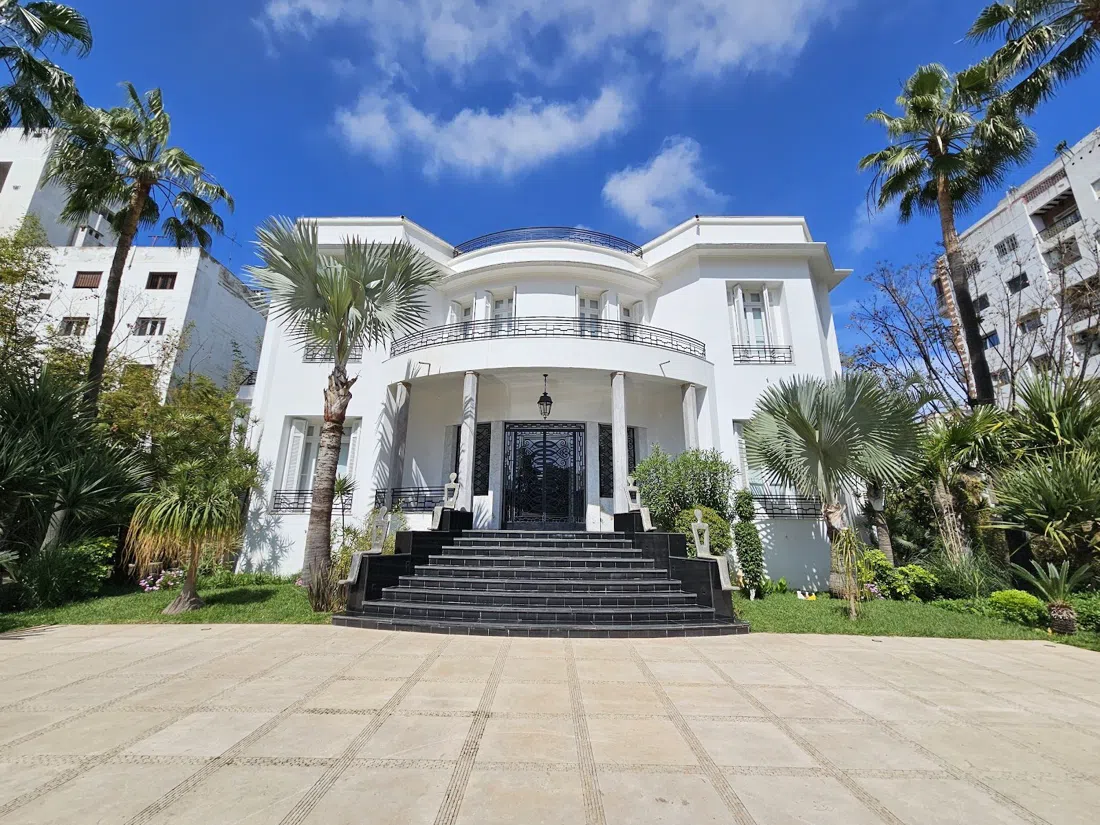
Musée de la Fondation Abderrahman Slaoui, a short walk away, is a tightly curated private collection in a beautiful house, with a rooftop café that is one of very few quiet perches in the centre. It opens Tuesday to Saturday, 10:00 to 18:00, closed Monday; 60 MAD for adults, 10 MAD for students and children over twelve, free under twelve. The rooms are small, so allow an hour and bring a couple rather than a coach.
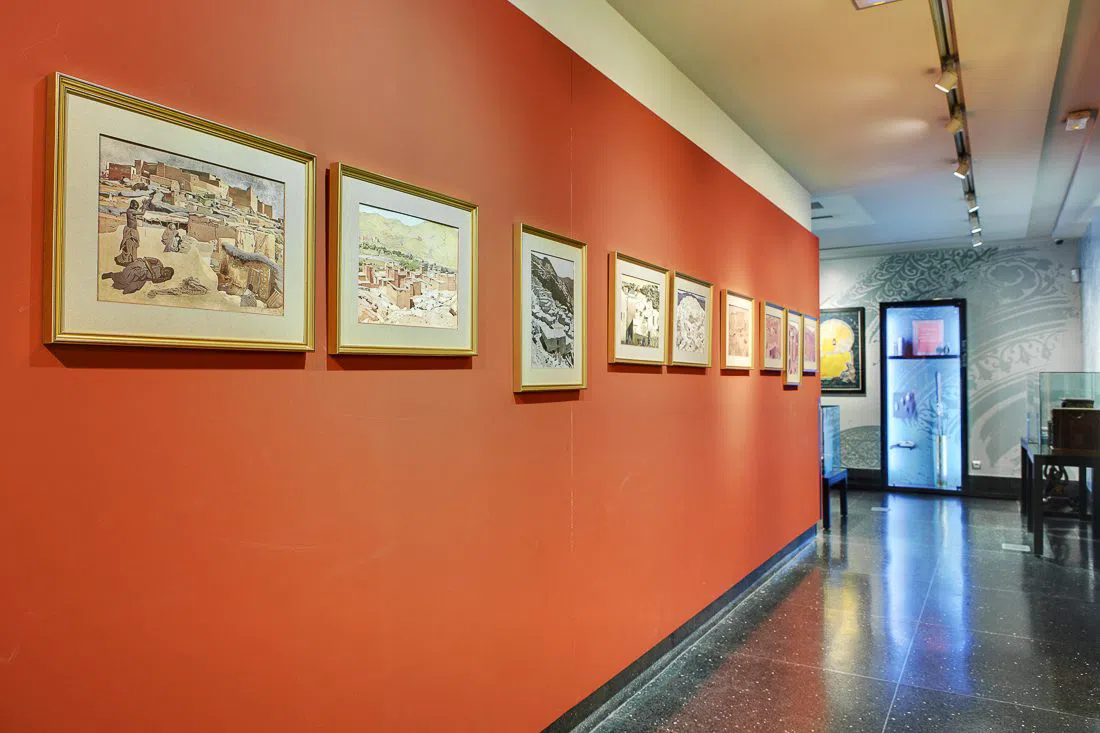
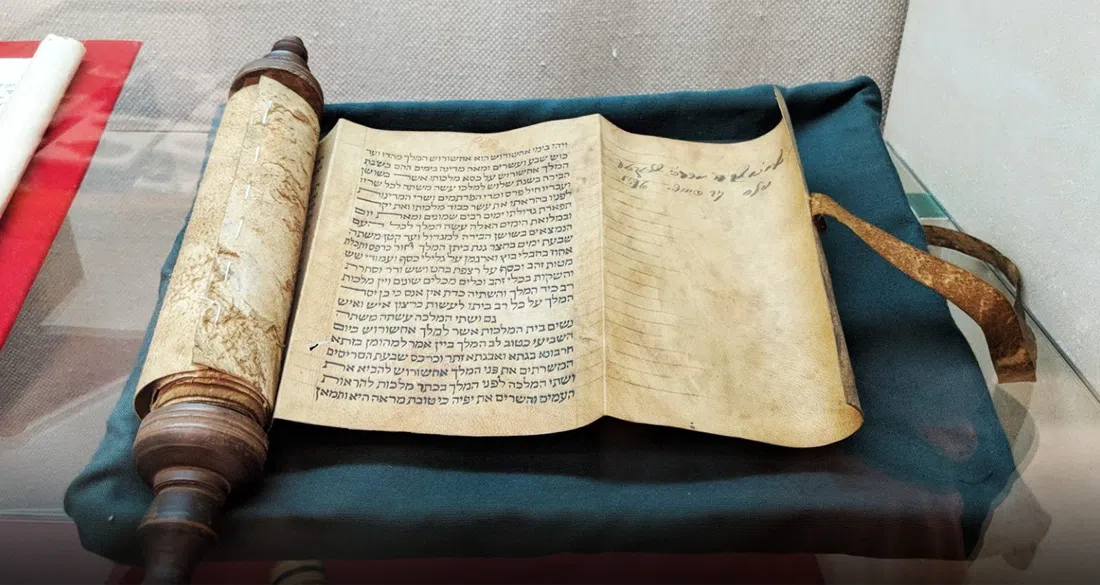
Musée du Judaïsme Marocain, out in the Oasis district, is the only museum of Judaism in the Arab world and a real counterweight to a mosque-only day. But the hours are unforgiving: Monday to Thursday 10:00 to 17:00, Friday 10:00 to 13:00, closed at weekends. If your ship calls on a Saturday or Sunday, take it off the list rather than discovering the door shut. Entry is 50 MAD, free on Wednesdays, and groups should call ahead.
Quartier Habous (Nouvelle Médina), including the Mahkama du Pacha, is the other direction: a 1920s planned quarter that reads far more easily than the old medina, with wide arcades, the best olives, spices, ceramics and argan oil in the city at market prices, and good bookshops. Go for the quarter itself. The Mahkama du Pacha is still a working government building and interior access is restricted and unpredictable, so treat a glimpse inside as a bonus and never a plan.
Rick's Café, near the medina, is the evening bookend to a mosque morning: a knowing recreation of the film bar rather than any kind of film location, silly on paper and genuinely well run in practice. Mains are roughly 200 to 400 MAD with drinks on top. Reserve by phone or email, because the room is intimate and it fills at dinner.
Best time to go
Take the 9h slot if you can. It is the coolest hour, the coaches have not yet converged, and the prayer hall is at its quietest. The 15h tour, or the 16h one between 15 March and 15 September, is the other good choice, because it leaves you on the esplanade exactly as the light drops, which sets up the walk west along the Corniche and dinner over the water.
Avoid the middle of the day if you care about photographs: noon flattens the west face and the courtyard has no shade. Avoid Friday if you can, since the schedule is cut back for prayer, and check the Ramadan timetable, which runs a reduced morning schedule only.
Season matters less here than almost anywhere in Morocco. The Atlantic keeps Casablanca temperate when the interior is punishing, and it also means wind: the esplanade is breezy in any month and the spray is real on a rising tide. Bring a layer you would not mind getting damp, and shoes you can slip off without sitting down.
Is it worth it
Yes, without qualification, and it is the rare major sight where that verdict is easy. It is the only large Moroccan mosque routinely open to non-Muslims, the craftsmanship is the genuine article rather than a reproduction of one, and the hour is well guided and briskly run. Families do well out of it: under-sixes are free and children from six pay 30 MAD. Anyone with an interest in building, tiling, carving or engineering will get more than they expect.
It suits you less if you need to photograph interiors, because you cannot, or if you are unwilling to cover shoulders and knees, because you will be turned away. And if you have only three hours off a ship, be honest about the arithmetic: the mosque plus the esplanade is a comfortable two hours, the medina makes three, and anything more is optimism.
Practical notes
The mosque is walkable from the port, the marina and the old medina. Otherwise take a red petit taxi, metered and cheap across the centre, and ask for the meter before you set off. The esplanade has plenty of space for a coach to set down.
Bring dirhams in small notes for the door ticket and the hammam. The cash machines at Marina Shopping are the most reliable ones within walking distance, and the ten-minute walk back to the gate is flat.
Allow ninety minutes for the mosque door to door. Add ninety for the hammam, twenty for the craft academy, an hour for breakfast at La Sqala, and you have a genuinely full half-day inside a few hundred metres.
A lean version of the day runs 140 MAD entry, 50 MAD hammam entry and 100 to 150 MAD for breakfast, under 400 MAD a head for the whole morning. A generous version adds a 150 MAD seawater basin, a scrub from 90 MAD, and dinner over the water at 400 to 700 MAD.
The city centre and the Corniche are the two sensible bases, the first for walking to the mosque and the museums, the second for sea air and evenings out; compare both on the Casablanca hotel search.